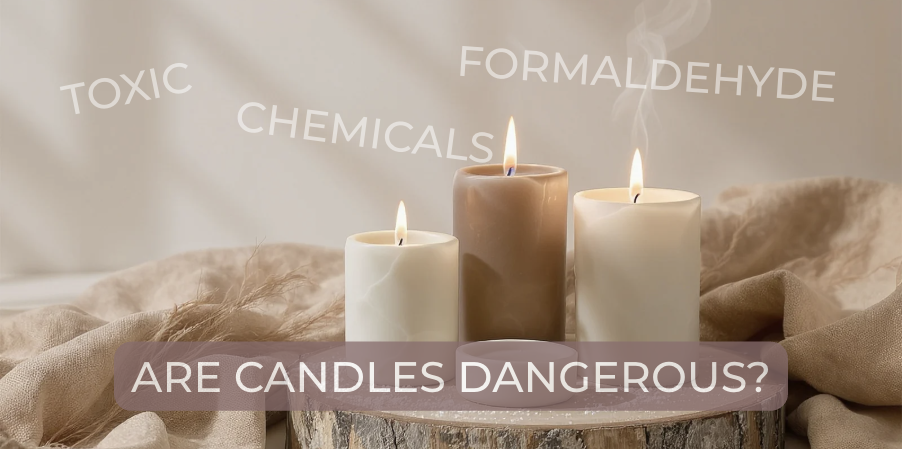
Where the “toxic candle” conversation comes from
The “toxic candle” discussions, warnings, and cautions are coming from wellness influencers, social media content creators, “Clean Beauty” brands, and perhaps most unsurprisingly, essential oil industries in the MLM industries. There’s also legitimate research studies that are being misinterpreted or analyzed with bias for an agenda.
Why are they spreading this conversation and spreading the “toxic candle” rhetoric? Simple. Fear sells.
“Clean” beauty and wellness marketing has been criticized for doing exactly this: portraying conventional ingredients as frightening or “toxic,” then positioning themselves as a safer alternative.
For example, 2 candle companies say the following about their products:
“Made with soy wax and fragrance oil”
vs.
“Made with CLEAN, NON-TOXIC soy wax and CLEAN fragrance.”
The second company hasn’t necessarily demonstrated that its candle is safer. But psychologically, it has introduced another idea:
If mine is non-toxic…what does that make theirs?
What’s important to this conversation is that burning anything is going to create combustion byproducts. But, the presence of a substance does not automatically equal dangerous exposure.
What are they saying is so toxic about candles?
Let’s take a look at the most common claims being made and take a closer look at them.
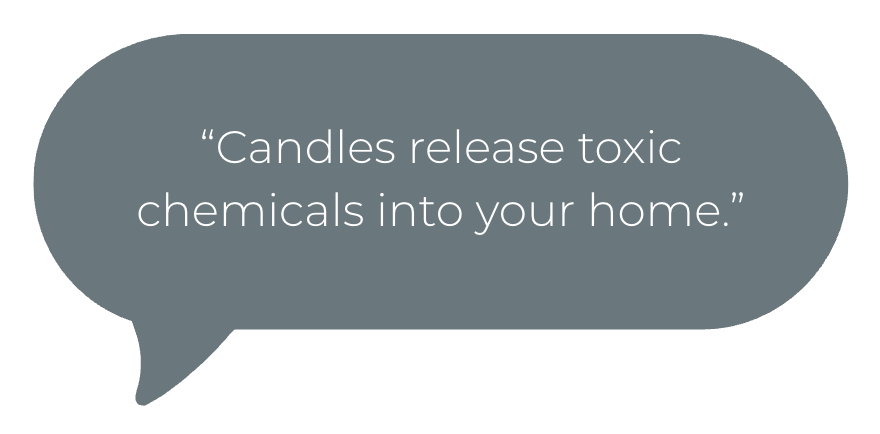
Candles can emit VOCs and combustion products such as benzene, formaldehyde, and acrolein, but presence doesn’t equal harmful exposure. A health-risk assessment of scented candles found no known health risks to consumers under normal conditions of use.[PubMed]
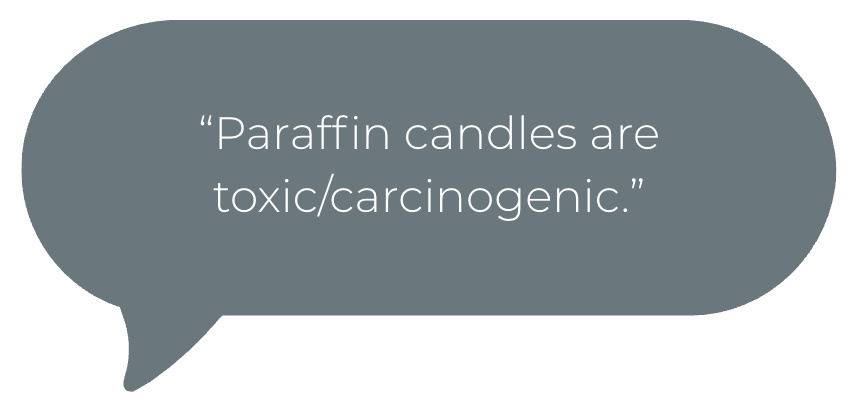
Paraffin is often described as a petroleum byproduct that releases carcinogens like benzene and toluene when burned, with some sources even comparing candle emissions to diesel exhaust. [Mothers and Others for Clean Air] But identifying a hazardous compound isn’t the same as demonstrating exposure to a hazardous dose.
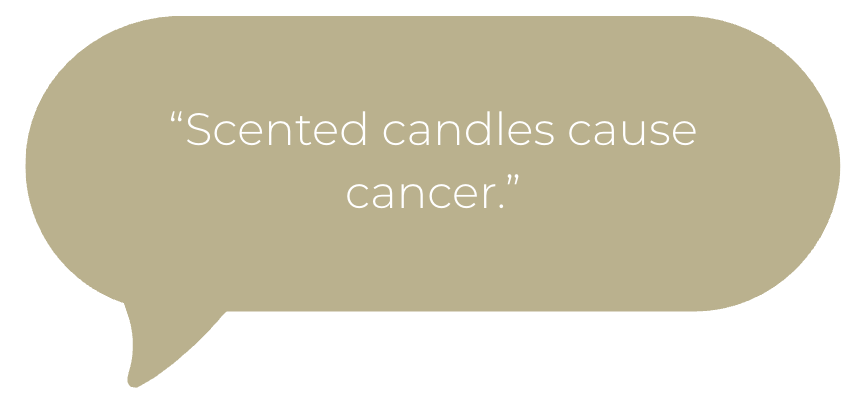
Some research has explored potential cancer risks from candle emissions, but that’s far from evidence that burning scented candles causes cancer. One published discussion noted that measured benzene and naphthalene levels were below concentrations considered to cause toxic effects. [AACR Journal]
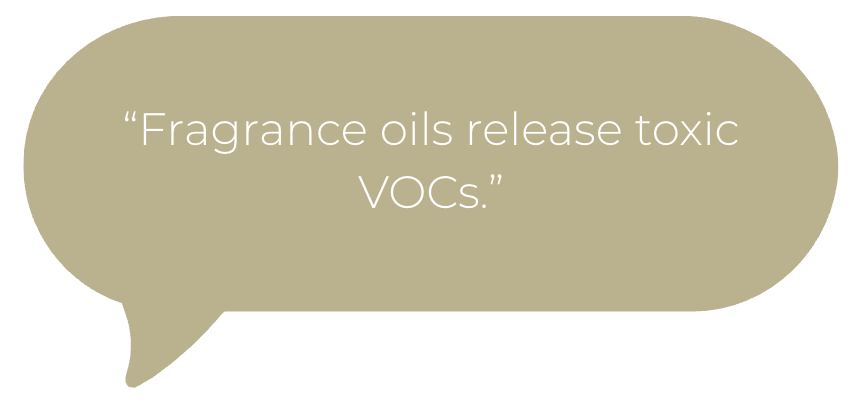
Fragrance materials can release VOCs and may trigger headaches, irritation, or asthma symptoms in sensitive individuals. [American Lung Association] But “releases VOCs” doesn’t automatically mean “toxic.”
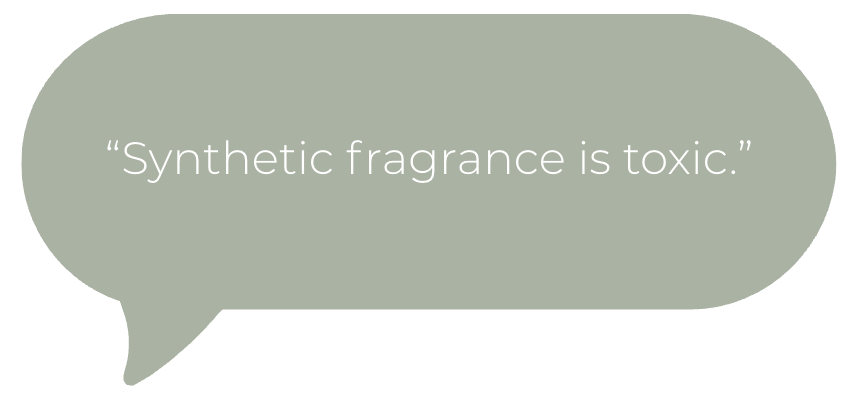
“Natural” doesn’t automatically mean safer. Natural fragrances and essential oils can also contain VOCs and allergens, so their source alone doesn’t determine their safety. [National Geographic]
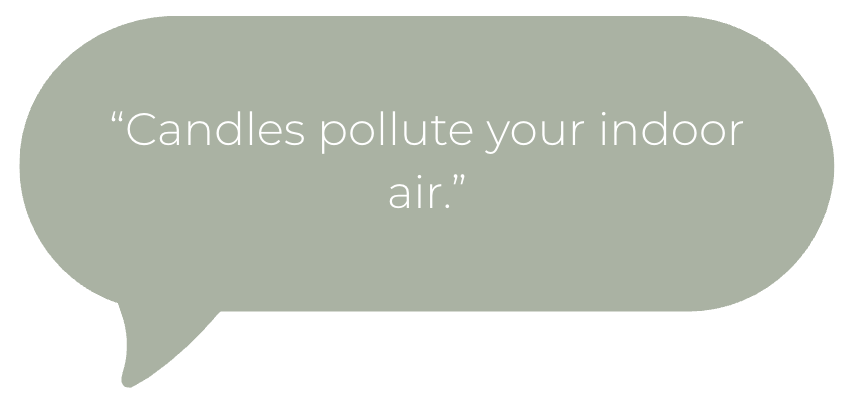
Burning candles does contribute particles, gases, and volatile compounds to indoor air. [National Geographic] But contributing to indoor air pollution doesn’t automatically mean creating dangerous levels; concentration, ventilation, and duration of exposure matter.
Candles can release fine particles, particularly when producing soot, but current evidence doesn’t show that normal candle use causes lung damage in humans. A 2025 Cleveland Clinic review notes that occasional use is unlikely to pose a significant health risk for most people.
Fragrance and smoke can trigger symptoms in some people with asthma, COPD, allergies, migraines, or fragrance sensitivities. That’s a legitimate concern, but individual sensitivity isn’t the same as universal toxicity. [American Lung Association]
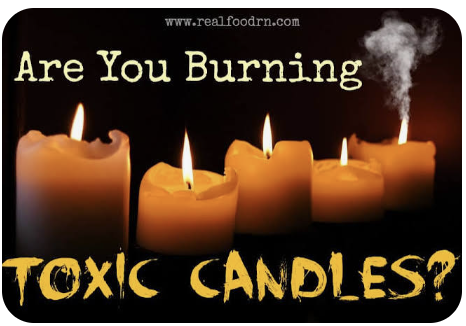
This is a real post from realfoodrn.com
What does '“toxic” actually mean?
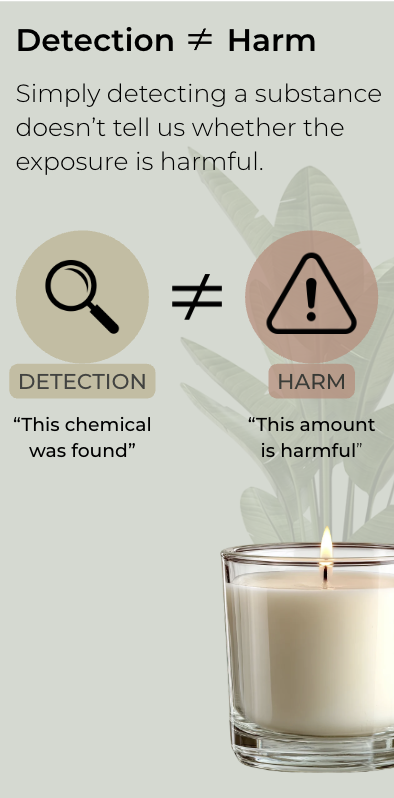
The word toxic gets thrown around a lot, but detecting a potentially harmful substance doesn’t automatically mean something is dangerous.
“Toxicity depends on dose and exposure, including how much of a substance you’re exposed to, how often, for how long, and how it enters the body. ”
This is the difference between hazard and risk. A hazard is something with the potential to cause harm, while risk considers how likely that harm is under actual exposure conditions. So when you hear that candles can release substances such as benzene or formaldehyde, the important question isn’t simply “Are they present?” It’s “At what concentration, and does that amount pose a meaningful risk?”
That context is often missing from alarming claims about “toxic” candles. [Human Health Risk Assessment]
What does a burning candle actually release?
Burning a candle does release substances into the air. Like other forms of combustion, candles can produce particulate matter and small amounts of combustion byproducts, and soot can occur when combustion is less efficient. [U.S. Environmental Protection Agency]
Scented candles can also release volatile organic compounds (VOCs), including fragrance-related compounds such as terpenes. Research shows that the amount and concentration of these compounds can vary based on factors such as the product, how it is used, burn duration, and ventilation. [Chemosphere]
None of this is imaginary, and it shouldn’t be dismissed. But…
Detecting a substance in the air is not the same thing as demonstrating a harmful level of exposure. How much is released, how concentrated it becomes, how long someone is exposed, and the ventilation of the space all matter when evaluating actual risk.
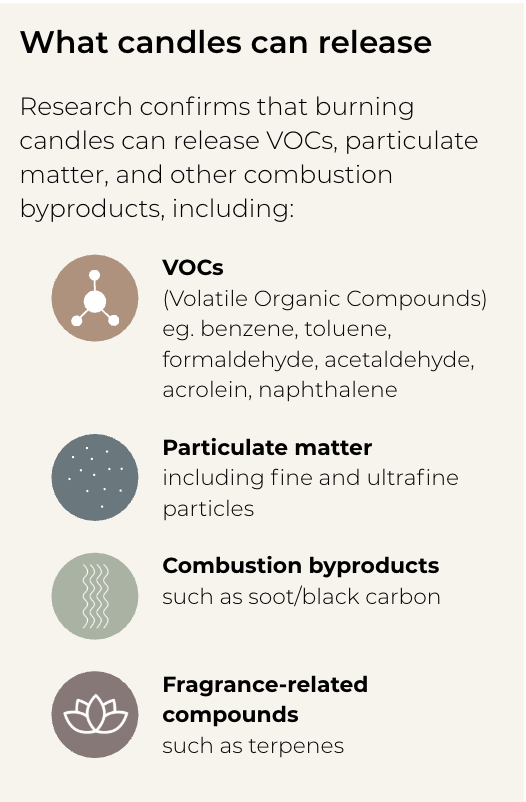
What the research tells us.
Research confirms that burning candles can release VOCs, particulate matter, and other combustion byproducts. But simply detecting a substance doesn’t tell us whether the exposure is harmful.
One peer-reviewed study tested 24 scented and unscented candle configurations, then modeled indoor concentrations and compared them with established health-based reference values. For most compounds and scenarios evaluated, estimated concentrations remained below those reference values, although there were some exceptions under certain conditions. [Environment International]
More recent research reinforces that candle emissions aren’t one-size-fits-all. A 2024 study found that exposure to VOCs from scented candles varied depending on factors including the specific product, duration of use, number of products burning, and ventilation. In other words, how a candle is used and the environment it’s burned in matter when considering actual exposure. [Chemosphere]
There are limitations to the research. Studies test different waxes, fragrances, wicks, rooms, and burning conditions, so we can’t declare that every candle is completely risk-free. But the research also doesn’t support the idea that detecting a chemical automatically means a candle is “toxic.” The dose and level of exposure matter.
What determines how cleanly a candle burns?
A candle is a system, and its emissions are determined by the following:
Wax formulation
Fragrance
Wick selection
Flame size
Ventilation
and how the candle is burned all play a role.
Different waxes, including paraffin, soy, coconut, and blends, have different performance characteristics, but that doesn’t automatically make one “toxic” and another “non-toxic.”
The same goes for fragrance: “synthetic” doesn’t mean dangerous, just as “natural” doesn’t automatically mean safe. Even essential oils contain chemical compounds. IFRA establishes science-based standards that can prohibit, restrict, or set conditions on the use of certain fragrance materials. [IFRA]
At Ritual Candle Co., our fragrance oils are sourced from CandleScience, whose fragrances are formulated without phthalates and adhere to RIFM and IFRA standards for safety and purity.
How a candle burns matters just as much as what it’s made from.
A wick that’s too long, an oversized or unstable flame, drafts, or improper wick selection can contribute to visible soot and smoke.
This is why wick trimming and proper burn testing are so important. Professional candle makers test the combination of wax, fragrance, wick, and vessel to achieve a stable, efficient burn.
At Ritual Candle Co., this is also why we choose Coconut Apricot Crème wax and carefully burn-test our candles: not because other waxes are inherently “toxic,” but because we prefer its performance in our candles.
Are candles bad for indoor air quality?
Burning anything indoors can affect indoor air quality, and candles are no exception. But indoor air is influenced by many everyday activities, including cooking, fireplaces, cleaning products, fragrances, and other combustion sources.
Someone enjoying one candle for a few hours in a ventilated room isn’t necessarily experiencing the same exposure as someone burning several candles for long periods in a closed space. The EPA recommends adequate ventilation when burning candles and incense indoors. [U.S. Environmental Protection Agency]
It’s also important to recognize that people don’t all respond to fragrance the same way. Some people with asthma, COPD, allergies, migraines, or fragrance/chemical sensitivities may experience symptoms such as headaches, irritation, coughing, or wheezing around fragranced products and may need to limit or avoid them. [American Lung Association] That doesn’t mean their reaction isn’t real, nor does it mean a scented candle is universally “toxic.”
Something can be irritating or triggering for a particular person without being inherently dangerous to everyone who encounters it.
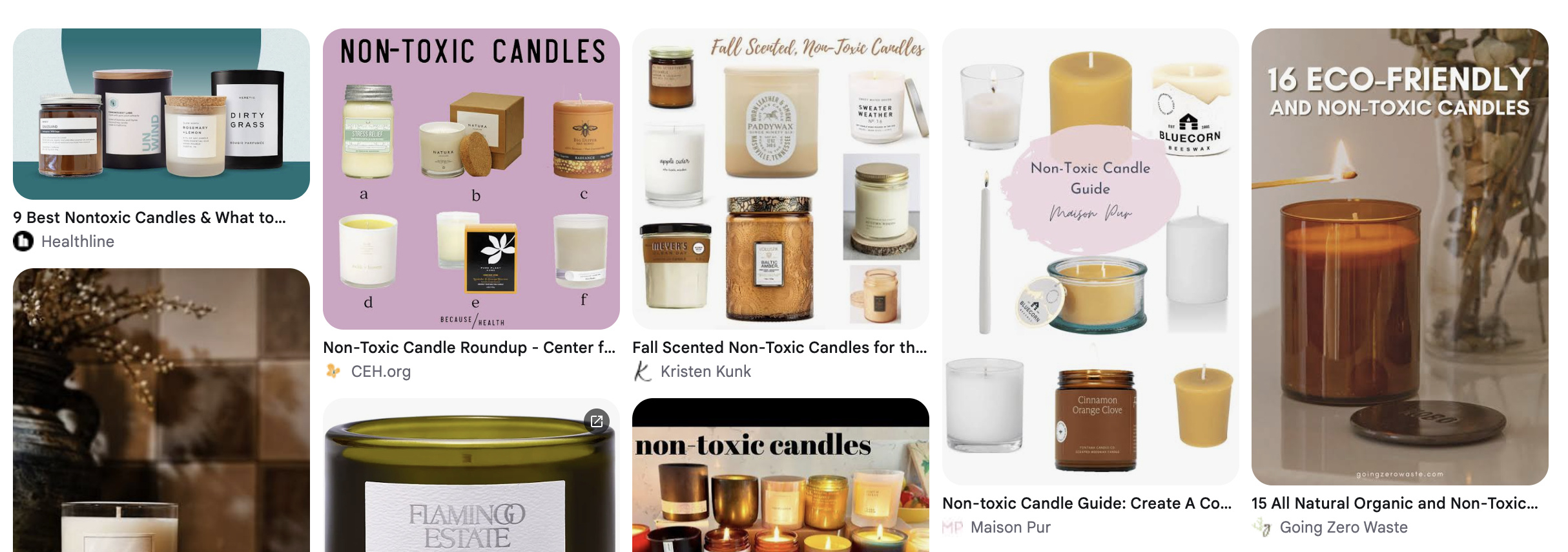
Marketing for “clean”, “non-toxic” candles on Google
What Do “Clean,” “Natural,” and “Non-Toxic” Actually Mean?
Words like “clean,” “natural,” “non-toxic,” and “chemical-free” sound reassuring, but they can also create the impression that products without those labels are inherently dangerous.
“Chemical-free” is especially misleading because everything around us, including water, plants, essential oils, and our own bodies, is made of chemicals. And “natural” doesn’t automatically mean safer. The FDA points out that an ingredient’s source doesn’t determine its safety, noting that natural ingredients can be harmful while synthetic ingredients can be safe. [U.S. Food & Drug Administration]
Instead of relying on reassuring buzzwords, look for candle makers who are transparent about the following:
their materials
provide proper candle-care instructions
follow applicable safety standards
and actually test their candles for performance.
At Ritual Candle Co., we’ll happily tell you why we chose our Coconut Apricot Crème wax, wooden wicks, and fragrance oils and why we put so much time into burn testing them. We don’t need to scare you about someone else’s candle to explain why we’re proud of ours.
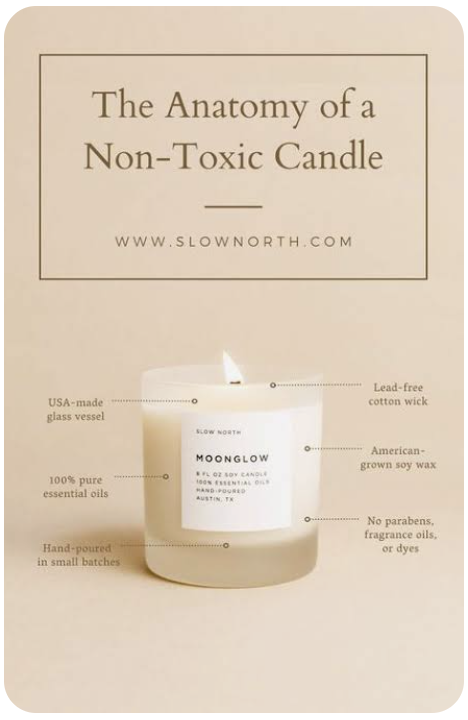
This is an actual marketing post that shows how the use of specific wording is misleading.
How to burn candles responsibly.
No matter what kind of candle you choose, how you burn it matters.
Here’s how to burn candles responsibly:
trim the wick according to the manufacturer’s instructions
keep the wax pool free of wick trimmings and debris
and keep the candle away from drafts, fans, and air currents that can cause an uneven or unstable flame
avoid excessively long burn sessions and stop using the candle when it reaches the manufacturer’s recommended remaining wax level. [National Candle Association]
Most importantly, never leave a burning candle unattended, and keep it away from children, pets, and anything that could catch fire. Burn candles in an appropriately ventilated space and follow the care instructions provided with your specific candle rather than assuming every wax, wick, and vessel should be treated the same way.
Responsible candle use isn’t complicated, but a few simple habits can help your candle burn more safely and perform the way it was designed to.
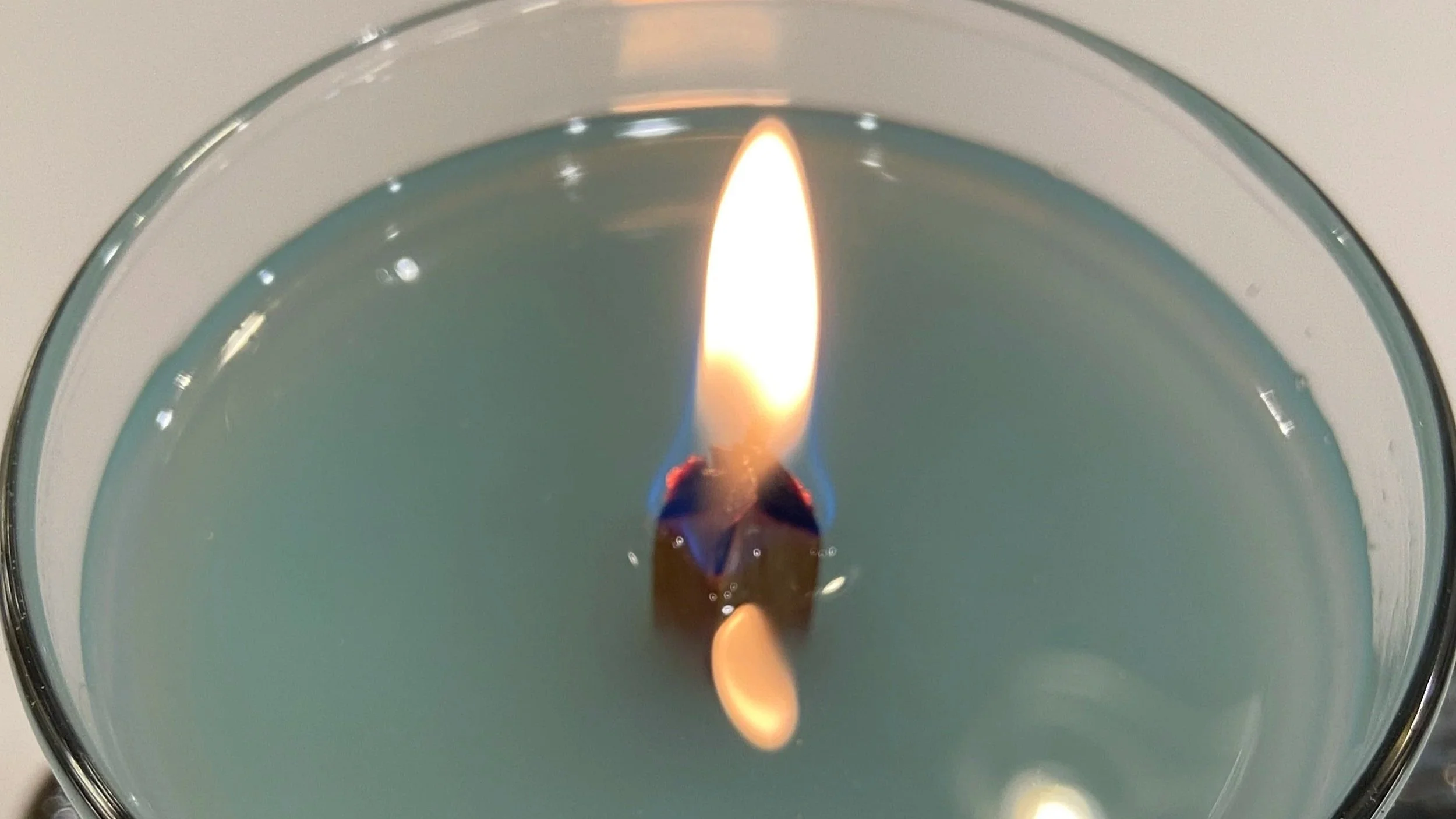
What Ritual Candle Co. does to prioritize safety.
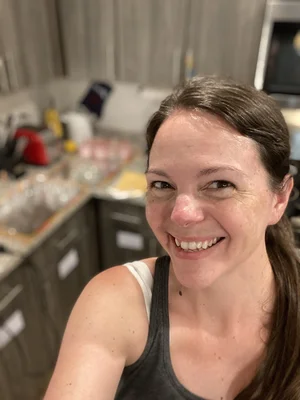
At Ritual Candle Co., safety starts long before a candle reaches your home. As much fun and fulfillment I personally have making candles, I also take this craft seriously. I’m a perfectionist, highly empathetic, and take feedback sincerely. I perform quality assurance tests after each batch of candles to see how the wicks are performing and to ensure the flame size is safe.
I only source my materials from the very best local suppliers possible. This ensures that they follow federal standards for safety and are made with a certain quality that aligns with my business and values. Just a few of my suppliers are as follows:
Fragrance Oil - CandleScience (TX)
formulated without phthalates and adhere to RIFM and IFRA standards for safety and purity
Mica - Makesy (TX)
keep sustainability sourced & eco friendly supplies top of mind when creating and sourcing their products.
Wax - Hive & Honey Candle Supply (MI)
made in the USA from FDA-approved waxes and is free from phthalates, parabens, and toxins.
And testing doesn’t stop after a product launches. When customer feedback was collected regarding flame size, I changed the wick configurations, retested every affected candle size, and re-wicked the existing inventory.
To me, responsible candle-making means paying attention to how our candles actually perform and being willing to make changes when something can be better.
So, are candles toxic?
Candles aren’t emission-free. They involve combustion, and combustion produces byproducts. But that’s very different from saying that occasionally burning a properly formulated candle as directed is “poisoning” your home. Hazard ≠ risk. Something can have the potential to cause harm at a particular dose or level of exposure without normal use necessarily representing a meaningful risk.
Consumers deserve accurate information so they can make informed choices about the products they bring into their homes. Fear shouldn’t be a marketing strategy. We don’t need to pretend candles produce nothing when they burn, and we don’t need to exaggerate what they produce either. There’s plenty of room in between for science, transparency, responsible candlemaking, and enjoying a candle for what it is: a small ritual that can make your space feel a little more like home.
Ready to find a candle made with thoughtful ingredients, careful testing, and absolutely no fear-based marketing? Explore Ritual Candle Co. and find the fragrance that belongs in your next ritual.